
Home
1830
1839-05-11: Ontario passes “An Act to Authorise the Erection of an Asylum within this Province for the Reception of Insane and Lunatic Person.”
1860
1865: First proto-eugenics articles by Francis Galton in MacMillan's Magazine
1866-02-20: Gregor Mendel publishes his paper, “Versuche über Pflanzenhybriden”
1867: Ugly Laws
1867: Canadian Constitution Act gives federal parliament legislative authority over "Indians, and Lands reserved for Indians"
1869: Galton publishes Hereditary Genius
1870
1870: Canadian Residential Schools in operation
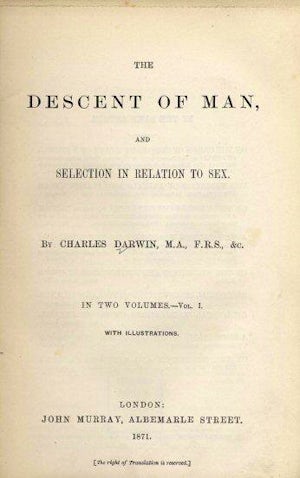
1871: Charles Darwin publishes The Descent of Man

Delaware passes sexual sterilization legislation

Delaware passes sexual sterilization legislation

January 2, 1923. The Legislature of Delaware passes "An act to provide for the sterilization of certain defectives". The aim of this legislation was to allow for the legal sterilization of undesirable people living in state institutions. The legislation outlined: how decisions about sterilizations were to be made, how financial reimbursement for sterilizations were to be administered, and how records were to be kept.

Each institution in the care of mentally disabled persons was to have a board or commission which would appoint a physician and external medical expert. These two examiners, in conjunction with the superintendent of the institution, were to examine individuals thought to be at risk of reproducing people with undesirable traits (e.g., feeblemindedness).

If, in the opinion of the examiners, it was decided that such individuals should not reproduce, then sterilization operations could occur; provided that 30 days notification was given the individual's legal guardian (Laws of Delaware, ch. 62, §1-3, 152). It was the responsibility of the board or commission to pay for any costs incurred for the examinations or sterilization operations. Finally, the legislation required that records be kept about each sterilization approved by the board, along with delivering a biennial report to the Legislature about the results of the operations(Laws of Delaware, ch. 62, §1-3, 152-153). Noteworthy about this legislation is that it effectively was compulsory, as there were no procedural or legal safeguards.

The results of this legislation were immediately felt. Within the first ten years of this legislation's enactment some 44 people per year were sterilized. Some have suggested that his made Delaware the state with the highest sterilization rate per capita in the United States (Paul, p.321; Stern, p.1137). In total approximately 945 people were sterilized while this legislation was active; ranking Delaware thirteenth for documented sterilizations in the United States (Kaelber, 2011).

For more info visit here.

-Luke Kersten

  • State of Delaware. (1923). An Act to provide for the sterilization of certain mental defectives. Laws of Delaware.

  • Kaelber, L. (n.d.). Eugenics: Compulsory Sterilization in 50 American States. Retrieved from http://www.uvm.edu/~lkaelber/eugenics/OR/OR.html.

  • Paul, J. (1965). “Three Generations of Imbeciles are Enough:” State Eugenic Sterilization Laws in American Thought and Practice. (Unpublished manuscript). Washington D.C.: Walter Reed Army Institute of Research. Retrieved from http://buckvbell.com/pdf/JPaulmss.pdf.

  • Stern, A.M. (2005). Sterilized in the Name of Public Health. American Journal of Public Health, 95(7), 1128-1138. Retrieved from http://www.pubmedcentral.nih.gov/picrender.fcgi?artid=1449330&blobtype=pdf

Delaware passes sexual sterilization legislation

Delaware passes sexual sterilization legislation

January 2, 1923. The Legislature of Delaware passes "An act to provide for the sterilization of certain defectives". The aim of this legislation was to allow for the legal sterilization of undesirable people living in state institutions. The legislation outlined: how decisions about sterilizations were to be made, how financial reimbursement for sterilizations were to be administered, and how records were to be kept.

Each institution in the care of mentally disabled persons was to have a board or commission which would appoint a physician and external medical expert. These two examiners, in conjunction with the superintendent of the institution, were to examine individuals thought to be at risk of reproducing people with undesirable traits (e.g., feeblemindedness).

If, in the opinion of the examiners, it was decided that such individuals should not reproduce, then sterilization operations could occur; provided that 30 days notification was given the individual's legal guardian (Laws of Delaware, ch. 62, §1-3, 152). It was the responsibility of the board or commission to pay for any costs incurred for the examinations or sterilization operations. Finally, the legislation required that records be kept about each sterilization approved by the board, along with delivering a biennial report to the Legislature about the results of the operations(Laws of Delaware, ch. 62, §1-3, 152-153). Noteworthy about this legislation is that it effectively was compulsory, as there were no procedural or legal safeguards.

The results of this legislation were immediately felt. Within the first ten years of this legislation's enactment some 44 people per year were sterilized. Some have suggested that his made Delaware the state with the highest sterilization rate per capita in the United States (Paul, p.321; Stern, p.1137). In total approximately 945 people were sterilized while this legislation was active; ranking Delaware thirteenth for documented sterilizations in the United States (Kaelber, 2011).

For more info visit here.

-Luke Kersten

  • State of Delaware. (1923). An Act to provide for the sterilization of certain mental defectives. Laws of Delaware.

  • Kaelber, L. (n.d.). Eugenics: Compulsory Sterilization in 50 American States. Retrieved from http://www.uvm.edu/~lkaelber/eugenics/OR/OR.html.

  • Paul, J. (1965). “Three Generations of Imbeciles are Enough:” State Eugenic Sterilization Laws in American Thought and Practice. (Unpublished manuscript). Washington D.C.: Walter Reed Army Institute of Research. Retrieved from http://buckvbell.com/pdf/JPaulmss.pdf.

  • Stern, A.M. (2005). Sterilized in the Name of Public Health. American Journal of Public Health, 95(7), 1128-1138. Retrieved from http://www.pubmedcentral.nih.gov/picrender.fcgi?artid=1449330&blobtype=pdf