
Home
1830
1839-05-11: Ontario passes “An Act to Authorise the Erection of an Asylum within this Province for the Reception of Insane and Lunatic Person.”
1860
1865: First proto-eugenics articles by Francis Galton in MacMillan's Magazine
1866-02-20: Gregor Mendel publishes his paper, “Versuche über Pflanzenhybriden”
1867: Ugly Laws
1867: Canadian Constitution Act gives federal parliament legislative authority over "Indians, and Lands reserved for Indians"
1869: Galton publishes Hereditary Genius
1870
1870: Canadian Residential Schools in operation
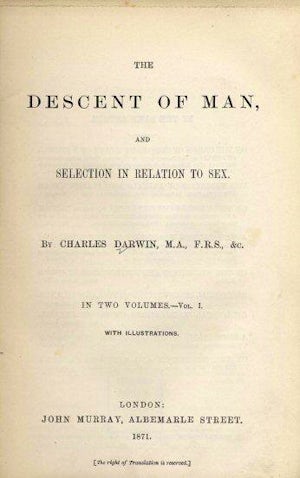
1871: Charles Darwin publishes The Descent of Man

Robert K. Graham establishes the Repository for Germinal Choice

Robert K. Graham establishes the Repository for Germinal Choice

1979. Robert K. Graham, a multi-millionaire, establishes the Repository for Germinal Choice in Escondido, California. The Repository, which operated until 1999, was a sperm bank offering potential parents sperm donated by scientists and academics. He was a eugenicist who was pessimistic about the future of the human race and believed that only intelligent individuals should be allowed to have children. The goal of the Repository according to Graham was to produce “"creative, intelligent people who otherwise might not be born” (Plotz, 2001).

The first baby was born from the Repository in 1982, and it claimed to have resulted in 229 children by the time of its closure. Though it developed a reputation as the "Nobel Prize sperm bank," only one Nobel laureate is know to have donated: William Shockley, the 1956 recipient for the Nobel Prize in Physics. Shockley had an interest in the genetic future of humanity, including issues of race, intelligence and eugenics, and spoke publicly about his views and donation to the Repository.

-Erna Kurbegovic and Amy Dyrbye

  • Plotz, D. (2001). The “Genius Babies” and How They Grew. Slate Retrieved from http://www.slate.com/articles/life/seed/2001/02/the_genius_babies_and_how_they_grew.html.

Robert K. Graham establishes the Repository for Germinal Choice

Robert K. Graham establishes the Repository for Germinal Choice

1979. Robert K. Graham, a multi-millionaire, establishes the Repository for Germinal Choice in Escondido, California. The Repository, which operated until 1999, was a sperm bank offering potential parents sperm donated by scientists and academics. He was a eugenicist who was pessimistic about the future of the human race and believed that only intelligent individuals should be allowed to have children. The goal of the Repository according to Graham was to produce “"creative, intelligent people who otherwise might not be born” (Plotz, 2001).

The first baby was born from the Repository in 1982, and it claimed to have resulted in 229 children by the time of its closure. Though it developed a reputation as the "Nobel Prize sperm bank," only one Nobel laureate is know to have donated: William Shockley, the 1956 recipient for the Nobel Prize in Physics. Shockley had an interest in the genetic future of humanity, including issues of race, intelligence and eugenics, and spoke publicly about his views and donation to the Repository.

-Erna Kurbegovic and Amy Dyrbye

  • Plotz, D. (2001). The “Genius Babies” and How They Grew. Slate Retrieved from http://www.slate.com/articles/life/seed/2001/02/the_genius_babies_and_how_they_grew.html.