
Home
1830
1839-05-11: Ontario passes “An Act to Authorise the Erection of an Asylum within this Province for the Reception of Insane and Lunatic Person.”
1860
1865: First proto-eugenics articles by Francis Galton in MacMillan's Magazine
1866-02-20: Gregor Mendel publishes his paper, “Versuche über Pflanzenhybriden”
1867: Ugly Laws
1867: Canadian Constitution Act gives federal parliament legislative authority over "Indians, and Lands reserved for Indians"
1869: Galton publishes Hereditary Genius
1870
1870: Canadian Residential Schools in operation
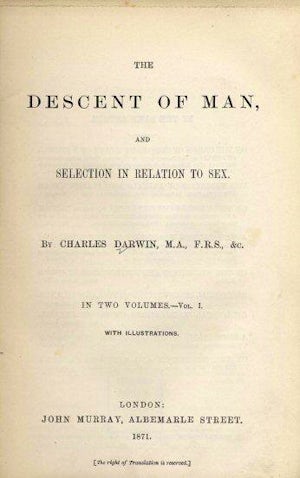
1871: Charles Darwin publishes The Descent of Man

First test tube baby is born in Britain

First test tube baby is born in Britain

July 25, 1978. Louise Brown, the first person to be conceived via in vitro fertilization (IVF), is born in Oldham, Greater Manchester. IVF is a series of complex techniques, in which mature eggs are collected from the ovaries of a woman (known as oocytes). These oocytes are then placed in a culture medium, and fertilized by sperm within a lab (Cohen, 1979). After many days, as the fertilized oocyte develops, it is transplanted into the woman's uterus, where implantation will hopefully occur (Cohen, 1979).

The technique was developed by Dr. Robert Edwards and Dr. Patrick Steptoe, who in 1969, succeeded in fertilizing the human egg outside the body. IVF is commonly used now to treat infertility or genetic problems in conception.

In 2010, Edwards won the Nobel Prize for physiology or medicine for the development of IVF. IVF can be used for preimplantation genetic diagnosis, which enables potential parents to screen for or against particular traits.

-Erna Kurbegovic, Colette Leung, and Amy Dyrbye

  • Cohen, M. (n.d.). The “Brave New Baby” and the Law: Fashioning Remedies for the victims of In Vitro Fertilization. American Journal of Law and Medicine, 4, 319-336.

  • Jones, Sam. (2013). IVF pioneer Robert Edwards dies aged 87. The Guardian. Retrieved from http://www.theguardian.com/science/2013/apr/10/ivf-pioneer-robert-edwards-dies.

First test tube baby is born in Britain

First test tube baby is born in Britain

July 25, 1978. Louise Brown, the first person to be conceived via in vitro fertilization (IVF), is born in Oldham, Greater Manchester. IVF is a series of complex techniques, in which mature eggs are collected from the ovaries of a woman (known as oocytes). These oocytes are then placed in a culture medium, and fertilized by sperm within a lab (Cohen, 1979). After many days, as the fertilized oocyte develops, it is transplanted into the woman's uterus, where implantation will hopefully occur (Cohen, 1979).

The technique was developed by Dr. Robert Edwards and Dr. Patrick Steptoe, who in 1969, succeeded in fertilizing the human egg outside the body. IVF is commonly used now to treat infertility or genetic problems in conception.

In 2010, Edwards won the Nobel Prize for physiology or medicine for the development of IVF. IVF can be used for preimplantation genetic diagnosis, which enables potential parents to screen for or against particular traits.

-Erna Kurbegovic, Colette Leung, and Amy Dyrbye

  • Cohen, M. (n.d.). The “Brave New Baby” and the Law: Fashioning Remedies for the victims of In Vitro Fertilization. American Journal of Law and Medicine, 4, 319-336.

  • Jones, Sam. (2013). IVF pioneer Robert Edwards dies aged 87. The Guardian. Retrieved from http://www.theguardian.com/science/2013/apr/10/ivf-pioneer-robert-edwards-dies.