
Home
1830
1839-05-11: Ontario passes “An Act to Authorise the Erection of an Asylum within this Province for the Reception of Insane and Lunatic Person.”
1860
1865: First proto-eugenics articles by Francis Galton in MacMillan's Magazine
1866-02-20: Gregor Mendel publishes his paper, “Versuche über Pflanzenhybriden”
1867: Ugly Laws
1867: Canadian Constitution Act gives federal parliament legislative authority over "Indians, and Lands reserved for Indians"
1869: Galton publishes Hereditary Genius
1870
1870: Canadian Residential Schools in operation
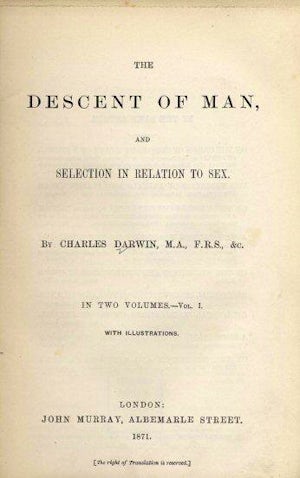
1871: Charles Darwin publishes The Descent of Man

Helen MacMurchy publishes The Almosts: A Study of the Feeble-Minded

Helen MacMurchy publishes The Almosts: A Study of the Feeble-Minded

1920. Helen MacMurchy’s book The Almosts: A Study of the Feeble-Minded was published in 1920 following her time as Ontario’s special inspector of the feebleminded, a position she held from 1906-1919. The work informed a wide audience of lay readers about the problems feeble-mindedness posed to public health and more generally to society, namely crime, prostitution, venereal disease, illegitimacy, and alcoholism. MacMurchy held that the feeble-minded were responsible for “for up to 60 per cent of…[the population’s] alcoholics, 66 per cent of its juvenile delinquents, 50 per cent of its unmarried mothers, and 29 to 97 percent of its prostitutes” (McLaren 1990, p.40)

In The Almosts, MacMurchy argues that the feebleminded are easily influenced by those around them, which often leads to their participation in criminal activity. She suggests that the feebleminded should be cared for, and sheltered from such “evil” influences from a young age in order to maintain their child-like innocence (MacMurchy 1920, p.19-22).

As Historian Angus McLaren explains, she argues, “[t]hese affectionate, good-natured, child-like beings could…prove to be productive workers if patiently trained…Such care necessitated the creation of services that would be ‘preventative, progressive, and educational rather than penal or merely custodial in character.’ Unthinking charity, asserted MacMurchy, had done nothing in the past to eradicate defectiveness; to get to the roots of the problem required a combination of the insights of business, science, and Christianity.” (McLaren 1990, p.39)

She called for the segregation of those deemed feeble-minded, arguing that such action paid for itself as greater expenses would arise if they were allowed to “roam free”. In MacMurchy’s opinion, educating the feeble-minded in public schools was a waste of money and time (McLaren 1990, p. 39-40).

MacMurchy's works were influential in Canada, where she was well respected as both medical professional and civil servant (Dagg, 2006, p.187).

The Almosts can be read online here.

-Amy Samson

  • MacMurchy, H. (1920). The Almosts: a study of the feeble-minded. Boston and New York: Houghton Mifflin Company. Retrieved from https://archive.org/details/almostsastudyfe00macmgoog

  • McLaren, A. (1990). Our Own Master Race: Eugenics in Canada, 1885-1945. Toronto: McClelland & Stewart Inc.

  • Dagg, A. I. (2006). The Feminine Gaze: A Canadian Compendium of Non-Fiction Women Authors and Their Books, 1836-1945. Waterloo, ON: Wilfred Laurier University Press.

Helen MacMurchy publishes The Almosts: A Study of the Feeble-Minded

Helen MacMurchy publishes The Almosts: A Study of the Feeble-Minded

1920. Helen MacMurchy’s book The Almosts: A Study of the Feeble-Minded was published in 1920 following her time as Ontario’s special inspector of the feebleminded, a position she held from 1906-1919. The work informed a wide audience of lay readers about the problems feeble-mindedness posed to public health and more generally to society, namely crime, prostitution, venereal disease, illegitimacy, and alcoholism. MacMurchy held that the feeble-minded were responsible for “for up to 60 per cent of…[the population’s] alcoholics, 66 per cent of its juvenile delinquents, 50 per cent of its unmarried mothers, and 29 to 97 percent of its prostitutes” (McLaren 1990, p.40)

In The Almosts, MacMurchy argues that the feebleminded are easily influenced by those around them, which often leads to their participation in criminal activity. She suggests that the feebleminded should be cared for, and sheltered from such “evil” influences from a young age in order to maintain their child-like innocence (MacMurchy 1920, p.19-22).

As Historian Angus McLaren explains, she argues, “[t]hese affectionate, good-natured, child-like beings could…prove to be productive workers if patiently trained…Such care necessitated the creation of services that would be ‘preventative, progressive, and educational rather than penal or merely custodial in character.’ Unthinking charity, asserted MacMurchy, had done nothing in the past to eradicate defectiveness; to get to the roots of the problem required a combination of the insights of business, science, and Christianity.” (McLaren 1990, p.39)

She called for the segregation of those deemed feeble-minded, arguing that such action paid for itself as greater expenses would arise if they were allowed to “roam free”. In MacMurchy’s opinion, educating the feeble-minded in public schools was a waste of money and time (McLaren 1990, p. 39-40).

MacMurchy's works were influential in Canada, where she was well respected as both medical professional and civil servant (Dagg, 2006, p.187).

The Almosts can be read online here.

-Amy Samson

  • MacMurchy, H. (1920). The Almosts: a study of the feeble-minded. Boston and New York: Houghton Mifflin Company. Retrieved from https://archive.org/details/almostsastudyfe00macmgoog

  • McLaren, A. (1990). Our Own Master Race: Eugenics in Canada, 1885-1945. Toronto: McClelland & Stewart Inc.

  • Dagg, A. I. (2006). The Feminine Gaze: A Canadian Compendium of Non-Fiction Women Authors and Their Books, 1836-1945. Waterloo, ON: Wilfred Laurier University Press.